About Coconino County

About Coconino County

Encompassing 18,661 square miles, Coconino County, Arizona, is the second largest county in the U.S. but one of the least populated. Our county includes Grand Canyon National Park, the Navajo, Havasupai, Hualapai and Hopi Indian Reservations, and the largest contiguous ponderosa pine forest in the world. Elevations range from 2,000 feet above sea level along the Colorado River to 12,633 feet at the summit of Mt. Humphreys in Flagstaff.

Disclosure: Some of the links on this site are affiliate links, and I may earn a commission if you click through and make a purchase.

A Joint Technical Rescue Training with Border Patrol

That was fun! And it was a challenging exercise, too.

Members of Borstar (which stands for Border Patrol Search, Trauma, and Rescue) out of Tucson invited our technical rescue team to join them for some training in Sedona. They'd come up from southern Arizona on Tuesday to work on wilderness survival and high-angle rescue skills, setting up camp in a beautiful spot overlooking red rock country.

On Wednesday morning, those of us from Coconino County Sheriff's Search and Rescue who were available to participate drove down to meet them, and after introductions were made around their morning campfire and breakfast and coffee were consumed, we moved to the site of the day's tech training: the canyon at Midgely Bridge.

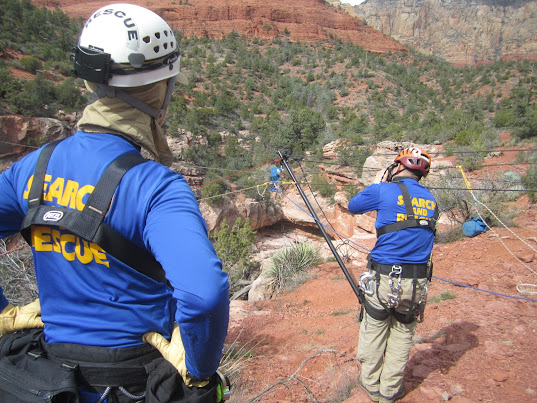
The goal for the day was to set up a high line across the canyon, then do some evolutions with a rescuer on the line, sending that brave soul out to the middle of the canyon, lowering and then raising the rescuer, and then hauling him or her back to one side of the canyon or the other. (I heard some onlookers refer to what we were setting up as a "zip line," but that's something quite different. We certainly didn't want to send anyone zipping anywhere.)


The first part of the operation was a real challenge, given that we didn't have one of those guns that shoots rope. (I've not seen one in action yet, but I've heard about this piece of equipment several times—every time we have to haul rope from one side of a canyon to another.) Once the rope, the track line, had been secured on the "near side" of the canyon, a Borstar member rappelled to the bottom, brought the rope across, and hooked it up to a line sent down from the "far side," so the other end of the rope could be raised and anchored over there. Problem was, there were trees in the way, and the rope had to clear those trees. And it was a lot of rope. The canyon was just shy of 300 feet from rim to rim.

No one was in a big rush, but it took quite a long time just to get the rope strung across the canyon. Then came the task of setting up the anchors, the artificial high directionals on both sides, the tag lines, and the hoist line. Issues were discussed (i.e., the angle of the monopod and guiding lines), and the teams on either side hiked around to the opposite rim via the bridge to inspect the other team's setup before any evolutions took place.

Finally, it was time to send someone across, down, up, and over. Some challenges were had along the way, but in the end, everything was done safely and successfully.

Here are some more photos from our fun day of training. (Some of my teammates went back to Sedona for a second day of joint training with Borstar.)...

One of my teammates helps Borstar members put together the monopod.

Getting some good shots of the system.

Putting together the final touches, like the big Kootenay pulley on the track line.

A rescuer is sent out over the canyon.

The rescuer is lowered mid-canyon, then raised and hauled to the other side.


A Happy Surprise in Waterholes Canyon


Once upon a time, there was a man in a canyon. Well, not just in a canyon, stuck in a canyon. This was a very deep and narrow canyon, and the man had been stuck down there for four days and three nights. Three very cold nights, that is, with little to protect him from the elements but a thin jacket and leaves he stuffed in his shirt. A winter storm had visited the area while he was down there, alone.

The man, a traveler from Europe, had run out of water in his Camelbak, probably on the first day. He had no food. He'd injured his left ankle, which was severely swollen, and had bad rope burns on his hands. By the fourth morning, he'd given up hope and "made peace," he later said. He knew he would not survive another night.

But he did! Thankfully, the cards were in his favor, as was his own strength, so he spent that fourth night in a warm bed instead of freezing, thirsty, hungry, and possibly dying in that canyon.

The man had entered the canyon on Friday. His flight home left from Las Vegas without him on Saturday. (Good thing it was that soon because no one may have realized he was missing until he missed that plane.) On Sunday, his wife had called for help when her husband failed to return, and that call for help was relayed to the Coconino County Sheriff's Department.

In the wee hours of the morning on Monday, the man's vehicle was located at the top of the slot canyon, in a pull-out along the highway south of Page, Arizona. The search and rescue team was called out at about 4 a.m., and north we went from Flagstaff. It didn't look good for the man we had to assume was somewhere in that big canyon, with many rappels, one about 400 feet in vertical length, between the highway and the Colorado River.

But then things took a turn... for the much better: A deputy walking the rim and calling out in the dark heard a voice answer from below. That great news was quickly relayed to our team as we drove, and the mood changed. Approximate coordinates were called in by the deputy on scene to our coordinator in another vehicle and transmitted from our coordinator to us.

Then our teammate in the passenger seat, an expert canyoneer very familiar with this canyon, plotted those coordinates on the map, knowing it was not possible to pinpoint the man's exact location by voice contact alone. Given a good idea of where he was, however—although he could have been at the top of a rappel or at the bottom—rescue scenarios were hashed out and re-hashed among us. Everything would depend, of course, on the man's actual location in the canyon and his physical condition.

The rescue could not have gone more smoothly. Two of my teammates and a medic from Page Fire Department entered Waterholes Canyon via a known "escape route" not far from where voice contact had been made from the rim. Carrying medical and warm-up gear, extra food and drinks (including some water I'd boiled for hot cocoa), they made their way down and then up-canyon toward the subject.

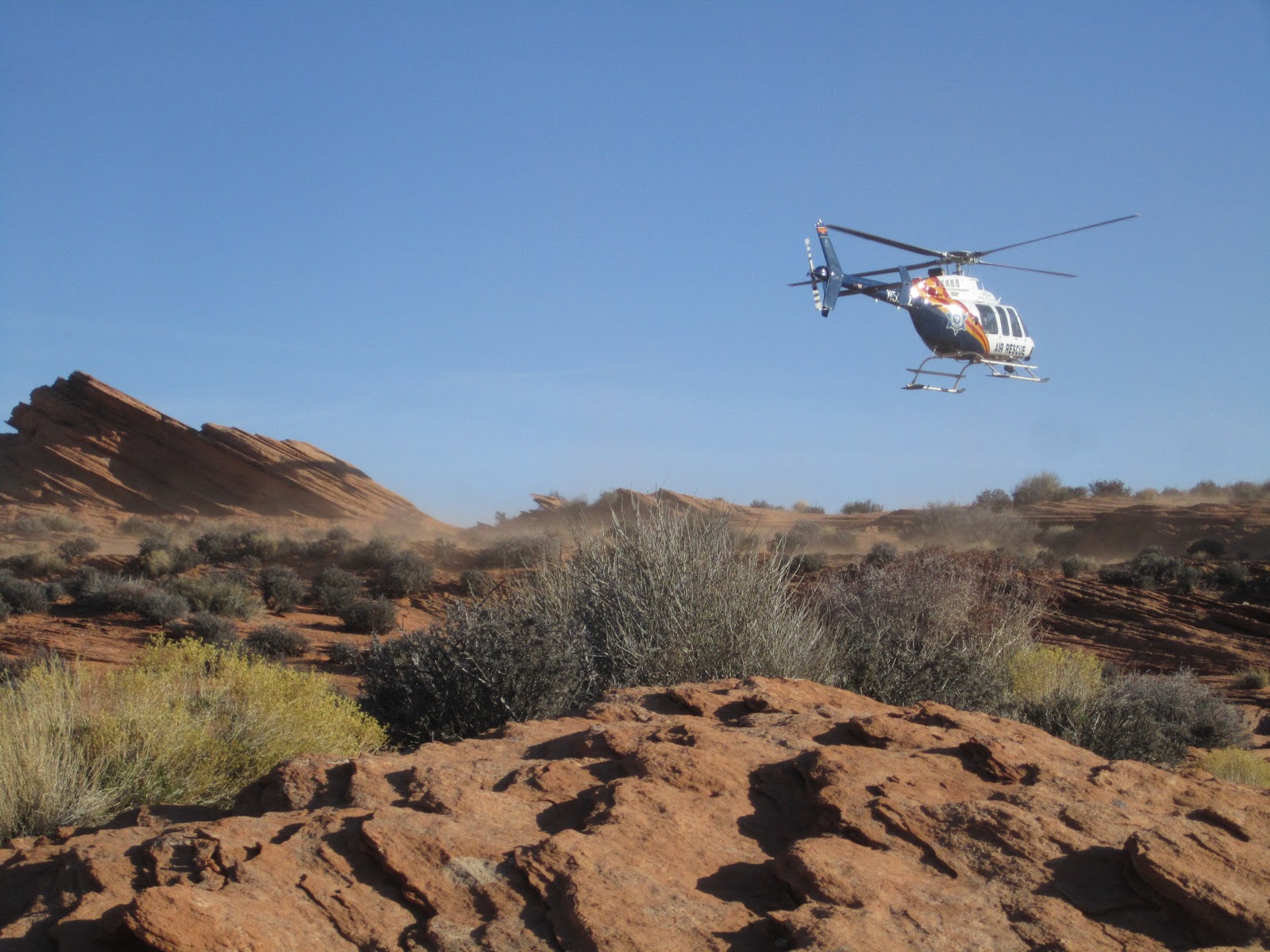
Meanwhile, the rest of us came up with a backup plan in case the man needed to be raised out of the canyon with a technical rope rescue system. The DPS helicopter had landed, and the pilot and medic stood by.

Regarding the helicopter crew, they'd flown over the canyon and spotted the man, but they would not have been able to short-haul him from his current location. The canyon was too deep and narrow. And given the fact that the man was standing and waving his arms, the added risk of performing a short-haul, had one even been possible, was deemed unnecessary. The man would either be assisted out by rescuers under his own power, or he would be "packaged" in either a litter or a harness and raised out of the canyon with an attendant.

As it turned out, the man, perhaps somewhat aided by adrenaline, was able to tough out his injuries and exit the canyon via the escape route, with the help of the three rescuers. As his head popped up over the rim, we all saw a big smile on his face, and we all smiled, too.

Joel and Mike get geared up and ready to go into the canyon.

Jeff from Page Fire looks down at the deputy on the rim.

Rescuers wait for word from those descending to the subject.

DPS Ranger out of Tucson arrives on scene.

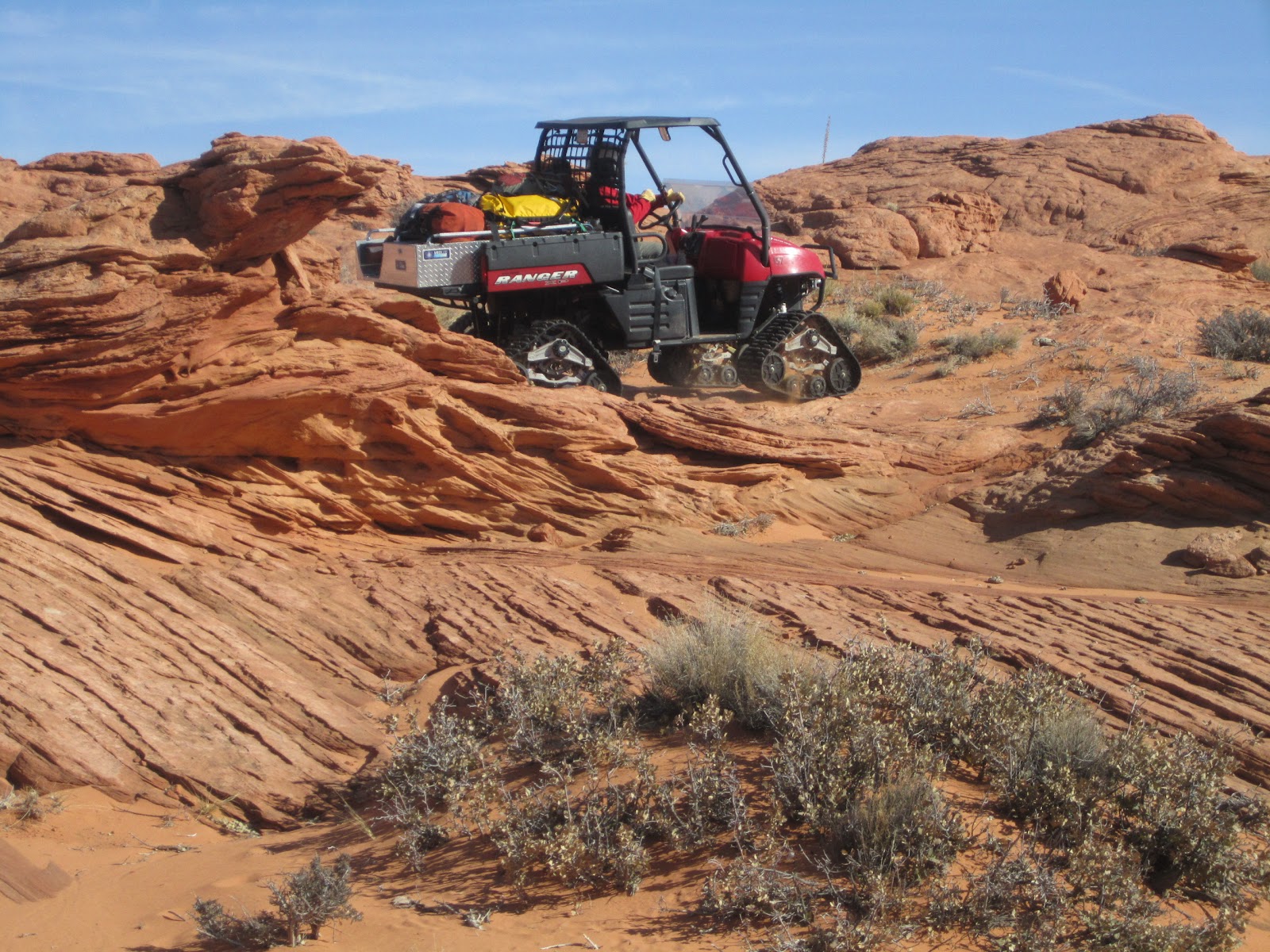
Our team's Polaris UTV with Mattrax is very useful in this rugged terrain. 

******

 And in other recent Coconino County Sheriff's Search and Rescue news...

There was a mission in Meadow Canyon, a moderately technical canyon south of Flagstaff. This was a search for two overdue canyoneers. (Canyon rescues seem to be... rather, I would say are on the increase in the area.)  I was unable to respond to this call, which came in the middle of the night, because I couldn't leave my sick pup (who's now fine, thankfully). But a teammate gave me the scoop. He said...

"I went on that call last night thinking it would last maybe 6 to 8 hours (I had a job lined up at noon) and instead it lasted 16 hours. A couple guys in their early 40s were overdue from a canyoneering trip. Eight of us tried all night to find roads that would take us to the edge of the canyon but with no luck. The back roads were muddy, icy and snow covered.

"The helicopter saw the subjects' campfire and got their coordinates, but we still couldn't get to them. With daylight, a radio was dropped to them and they claimed they were too tired and cold to go further and were afraid of the almost 100-yard swim in from of them.

"We talked about sending two people in by helicopter to help swim and hike them out but opted instead for a short haul. The chopper was low on fuel, so the subjects were flown just to the rim, and we had to pick them up via UTV and ATV. The road was strewn with boulders, mud and snow, and it took a couple of hours. On the way back, the ATVs got stuck in the snow a number of times. It was a long day, but the subjects were very thankful."

So, good, another happy ending! 

******
Need a new read? My novel "I. Joseph Kellerman" (which has nothing at all to do with SAR) is available on Amazon Kindle and in paperback. Thanks for putting up with my blatant plug.

Being a K-9 Backer -- A Search Near Wapatki

View of the San Francisco Peaks from Wapatki National Monument

The first call-out happened not long after I'd gone to bed. It was sleeting, and the roads were icy. Earlier that evening, I'd been reading online about lots of accidents in the area, and I knew my car was not adequate for driving in those conditions. So, I decided to stay home. That's never an easy decision for me.

At 5:45 the next morning, another call-out came through for a second operational period. The missing person hadn't been located during the hasty search overnight. Knowing I really didn't want to miss another call, my boyfriend kindly offered to drive me to the SAR building in his truck. Good thing because the roads were still very icy.

As I was getting ready for this winter weather mission, my phone rang again. It was our K9 handler, Cindy, asking if I'd be her backer as I've done a number of times now. I didn't hesitate. I really enjoy working with Cindy and her dogs. We'd meet at the SAR building and head out to the search area as quickly as possible, before the rest of the team, to get a head start so the dogs could do some searching before there were additional humans and their scents in the area.

When I'm backing the K9 team, I'm responsible for navigation and radio communication while I help Cindy keep an eye on the dogs (she often uses all three of her current search dogs at the same time) and do my own searching, too.

I also help Cindy decide the best way to search our assigned area. Sometimes, the Incident Commander asks us what we think the best area and search strategy would be, so we put our heads together and hash out ideas, taking into account wind direction (related to the dogs' ability to scent a subject), terrain, and what we know about the missing person's actions and the point last seen (PLS).

In this case, we were searching for a missing woodcutter. He'd disappeared around 4:30 p.m. the day before, walking away from his two companions during very cold and windy conditions. It had gotten even colder with precipitation overnight. The other two men, who hadn't seen their friend's direction of travel when he wandered away, stayed in the area for a while, searching, then left and called for assistance.

So, we knew basically where to begin—the general area along a Forest Service road on BLM land, just outside of Wapatki National Monument—but not a specific point. No footprints had been found by trackers during the overnight hasty search, so we still had no direction of travel. The area is mostly cinder-covered with lots of pinon pine and juniper (much more than what's shown in the photo above). Cindy and I noted that our own footprints were very clear in the cinders, so we knew that the subject's would be as well.

Cindy tested the wind direction with her little bottle of baby powder. She does this frequently as we search with the dogs, since wind direction can change quickly. We also discussed where to search and what to use as boundaries in this very open area. We noted power lines both on the map and in the field, along with two-track roads we could use. We would also use random GPS coordinates to create the area for our grid search.

At this point, given what we knew, we agreed that walking tight grids would be best, in case the subject were unresponsive (i.e., due to hypothermia or worse).

As we were getting our packs together and putting the harnesses with GPSes on the dogs, word came over the radio that the missing subject had just called a family member on his cellphone, saying he was very cold and trying to walk toward Wapatki Road. He was alive! Unfortunately, the phone call was dropped and no further contact had been made. Cell service was very sketchy out there, and I had none at all.

Wapatki Road surrounds the area in a big loop. So, the subject could have been walking in any direction toward this "catch feature." And we still had no idea where he was, so his distance from the road could potentially have been a very long way. But now that we knew he was alive and moving, Cindy and I agreed to make our grid passes with the dogs much wider.

Based on wind direction and given the area the DPS helicopter had been flying over as we'd been en route and getting ready, we decided on the area we'd search. We got moving at a pretty good clip, the dogs running and weaving, working excitedly. Cindy and I called and whistled for the subject as we watched the dogs for any sign they were working scent.

I glanced at my GPS now and then, to make sure we were making relatively parallel grids, letting Cindy know if she should angle a bit more to the left or right. I stayed a bit behind her and several paces to her side, keeping downwind of the dogs so my scent wouldn't interfere. I also let Cindy know when it was time to turn around for the next pass.

After about two hours of searching in long, wide grids and yelling and whistling, I called in to base. We'd not heard any radio traffic for a long while. Had any additional contact been made with the subject? Were the other searchers in the area yet?

As a matter of fact, the reply was: "The subject has been located. You can return to base."

It was a lengthy walk from our current location back to our vehicle, and I now noticed how tired I was from walking on cinders. (I don't notice fatigue as much when I'm actually searching.) The dogs, though, were still full of energy and still searching for human scent on the way back. To them, it's all a fun game.

When we met back up with IC, we learned that the subject had been found along a Forest Service road (not the paved Wapatki Road) a good distance away from the area we'd been searching and in a direction the dogs could not have detected his scent on the wind. Still, we felt we'd done the best we could and made a good strategy decision based on what we'd known, which wasn't much, when we'd begun searching. Cindy and I were glad we'd had a chance to work together again.

Recent SAR Activity

I haven't posted in awhile, but that's not for lack of SAR activity. Although it's been slower than last year at this time when it comes to call-outs, there have been missions lately. It's just that, unfortunately for a writer-type like me, there have been a couple of recent missions I've participated in that I'm not able to write about due to their ongoing and, you might say, legally sensitive nature.

But... I can tell you about a few other missions, none of which I've been able to respond to myself. Two of those calls happened Wednesday, as I sat here with a nasty head cold and sore throat. Woe is me. So, my teammates filled me in...

A Bitter Cold Search on the North Rim

This search occurred a few days before Christmas. The call-out, which came at 3 a.m., was about a track hoe driver who didn't return from moving his machine from one area to another near the North Rim of Grand Canyon.

Searchers towed the team's snowcat and four snowmobiles a few hours from Flagstaff to Jacob Lake and then another 20 miles toward the Grand Canyon on Highway 67. They stopped at a side road the missing subject was reportedly on and sent in the 'cat, with the snowmobiles on standby. In about a mile, the 'cat found the track hoe with the driver inside, cold but otherwise in good shape. He had gotten low on fuel and stopped after midnight.

SAR volunteers were then told two of the subject's fellow employees had taken a Jeep to go look for him, so when the DPS helicopter arrived on scene, our coordinator directed the aircraft to look for their vehicle. The crew spotted the unoccupied vehicle and one subject a few miles away, walking toward the track hoe, so SAR volunteers in the snowcat went back in and picked him up. Turns out, he was the only one in the Jeep. 

It was bitterly cold out there, below zero with the wind chill, so searchers were glad to wrap things up.


A Joint Search for a Missing Hiker in Yavapai County

At 6 a.m. on the morning of Wednesday, December 28th, our technical/mountain rescue team was called to assist the Yavapai County team with a search for an overdue 21-year-old hiker, last seen on Tuesday at around noon in steep, rugged terrain near the Village of Oak Creek.

That hiker was Mahdi Harrizi, visiting the area with his family from New York. Mahdi's mother called for help at about 4 p.m. on Tuesday, after her son called her from his cellphone, saying he was stranded on a ledge near Castle Rock.

According to reports, Mahdi had taken a trail from behind the resort where they were staying. At the time his mother made the call for help, she had been able to see him up at the top of the mountain.

Searchers from Yavapai County arrived on scene soon after, just as the sun was setting, but Sheriff's deputies were unable to get a GPS coordinate on Mahdi's cell phone because of the remote location. Ground searchers and a Department of Public Safety helicopter crew looked for Mahdi throughout the night and then called Coconino County SAR for assistance.

From what I heard, just after the DPS helicopter dropped off more technical rescue SAR members at the top of the mountain at about 11:15 a.m. on Wednesday and were flying off, the crew spotted Mahdi's body between a sheer cliff and some shrubs. Sheriff’s officials stated that Harrizi apparently fell about 150 feet, and he may have fallen shortly after his conversation with his mother.

Here's a photo from one of my teammates who was at the top of the mountain....


From One Mission to Another

At 4 p.m. on the 28th, we received another call-out. This was another mission down in Sedona for a stranded climber. Additional technical rescue team members as well as general SAR were asked to respond, to assist the other tech team members already en route from the day's first mission to the next.

I don't yet have any details about what happened, but I'll fill in you once I do.

And now that I'm just about over this creeping crud I've had for several days, I've got my SAR gear ready to respond if... well, when we get another call.

Coconino County SAR Celebrates it's New Home


On Saturday, December 10th, a gathering of search and rescue volunteers, Sheriff's Office personnel, folks from the Department of Public Safety, Guardian Medical Transport, local fire departments, the Park Service and Forest Service, Sheriff's Posse volunteers, members of the County Board of Supervisors, friends and family and members of the public celebrated the Grand Opening of the new Coconino County Sheriff's Search and Rescue facility, which is located behind the law enforcement complex in Flagstaff.

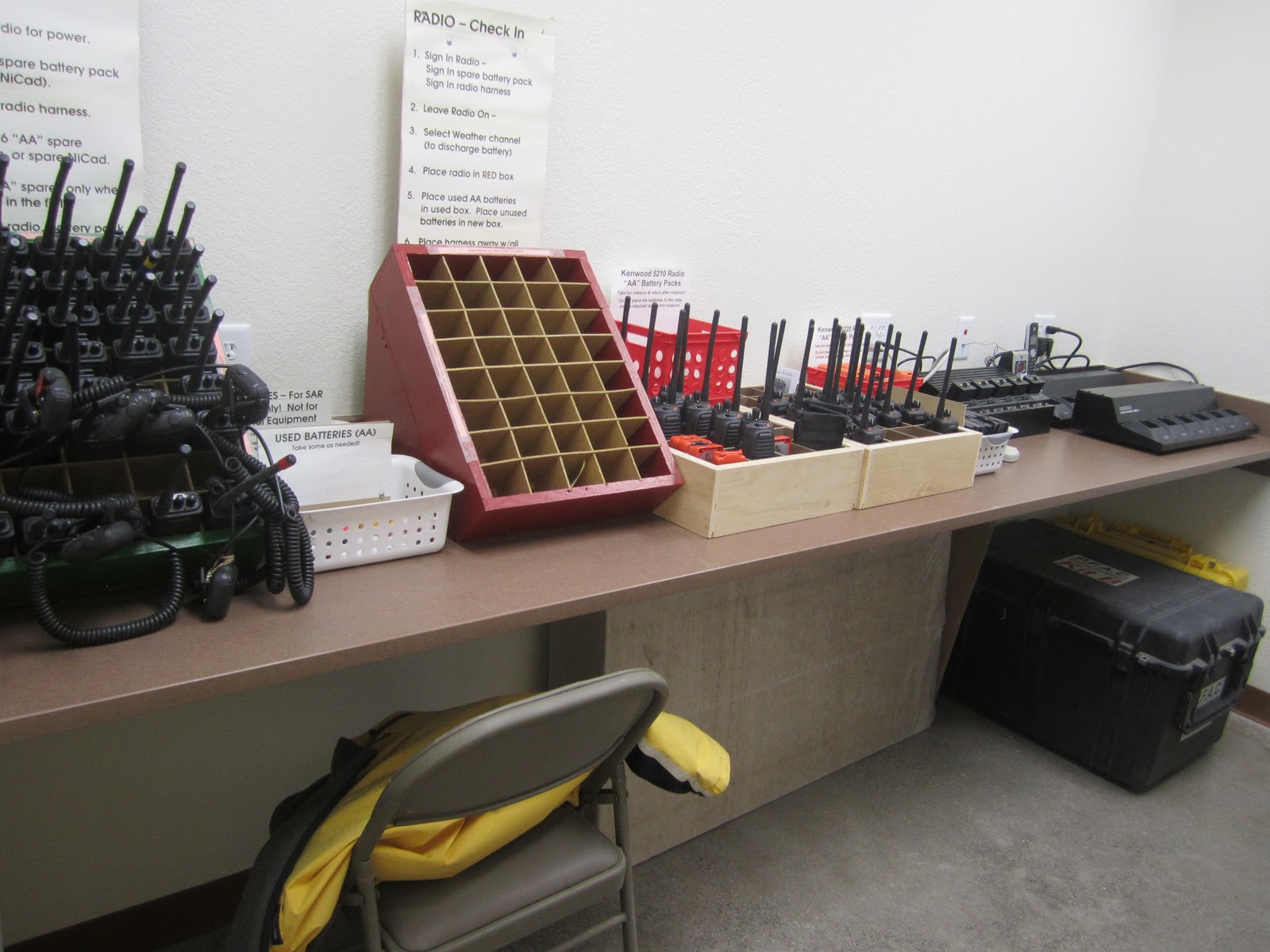
This new building houses all of our team's SAR equipment, including our technical rescue gear, snow and ice and medical equipment, a fleet of snowmobiles and ATVs, a snow cat and other search and rescue vehicles, communications equipment, water rescue equipment, and more.

The facility now also brings our meetings, trainings, and coordination under that same roof. This means more efficiency and even faster response times, since the team will no longer be operating between this new building and the main law enforcement building across the parking lot.

According to yesterday's article in the Arizona Daily Sun, construction on the new search and rescue facility began back in 2004, when the pavement was first poured. But that construction stalled soon afterward when financing dried up, and the actual structure wasn't completed until 2008. At that time, our team was able to move the equipment from its long-standing location on the east side of town at the county yard to the new west-side facility, making our response to call-outs more convenient for most of us.

From that point until just a few days ago, however, we'd been operating out of a shell of a building, with our coordinator and map-printing capabilities over in the Sheriff's Office, which meant that preparing to deploy for a mission was what you might call a fragmented operation. Not so any longer, thanks to additional funding of this project by the County Board of Supervisors, enabling the completion of the administrative side of the building. There's still work to be done, including the installation of a sixth bay door, a mezzanine, a climbing wall for training, and the paving of the exterior parking area, but that will happen over time.

On Saturday, SAR members were on hand to answer questions about our equipment, including a new Humvee from the Arizona National Guard, and our training program. Lunch was followed by comments from Sheriff Bill Pribil, members of the Board of Supervisors, and our team captain, Andrew Moore, and then a ribbon-cutting ceremony.

Here are some photos from the event...

The new sign

Our snow cat, some quads, and our new Hummer in the back

A gift from the National Guard

The huge bay where we store team equipment and vehicles.

Technical rescue and snow & ice equipment (and a rescue dummy)

The new communications room

The new meeting and training room with flat screen monitors

The kitchen, for events and to feed volunteers during big incidents

Our team captain cuts the ribbon as the Sheriff and many others look on